African Music: History, Genres and Global Influence
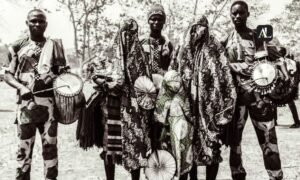
African music reached the Grammys as its own category only in 2024, yet its rhythms had been shaping blues, jazz, rumba, and hip-hop for generations. The story behind that sound spans 54 countries, well over a thousand languages, and many centuries.
So what is the history and evolution of African music? It began as community tradition: drumming, call-and-response singing, and spoken praise tied to everyday life. Contact with brass bands, church hymns, and Cuban records added new layers in the 1900s. Highlife, Congolese rumba and Afrobeat followed, and today Afrobeats and amapiano dominate the charts. This guide walks through each stage and explains what makes each one distinct.
African Traditional Music: Where It All Began
Traditional music in most African societies was never separate from daily life. Songs and drums announced births, guided initiation ceremonies, accompanied harvests and honoured the dead. Three features appear again and again: layered polyrhythms, call-and-response between a leader and a group, and a close link between music and spoken language. Southern African communities are also known for rich choral harmony.
Some instruments carry real history. West African griots, hereditary musician-historians, preserve genealogies and royal histories in song, often accompanied by the kora, a 21-string harp-lute. The Yoruba talking drum can imitate the rise and fall of speech, so a skilled player can almost spell out a message. In Zimbabwe, the Shona people play the mbira, a thumb piano used in ceremonies to call on ancestors. African traditional music still thrives in villages and at festivals, and it remains the source later styles keep returning to.
How African Rhythms Crossed the Atlantic
Between the 1500s and 1800s, millions of Africans were forcibly taken to the Americas, and they carried their musical memory with them. Polyrhythm, call-and-response, and drum-led dance took root in new places and helped shape the blues, jazz, gospel, Cuban song, and Brazilian samba.
That history makes Congolese rumba, covered below, something of a round trip. Cuban music with African roots returned to the continent and was reworked by local bands. Many sounds people call global today are African ideas that traveled, changed, and came back.
How Contact and Cities Changed the Sound
During the 1900s, guitars, brass instruments, church hymns and gramophone records reached African port cities and mining towns. Local musicians absorbed them without dropping their own rhythms. Record labels and radio stations in cities such as Lagos, Accra and Kinshasa gave bands a way to reach audiences far beyond their home towns.
On the Ghanaian coast, this mix produced highlife, which blended palm-wine guitar styles with brass-band arrangements and ruled the dance floors of the 1950s under bandleaders such as E.T. Mensah. In the Congo basin, Cuban records sold widely in the 1940s, and local bands turned them into Congolese rumba, later known as soukous, with its sweeping guitar lines.
Independence movements of the 1950s and 1960s gave music a political edge. Singer Miriam Makeba and trumpeter Hugh Masekela, both from South Africa, used their platforms abroad to speak against apartheid, and each spent decades in exile.
African Music Genres by Region
No list of African music genres can be complete, but a few regional styles show how varied the continent is:
- West Africa: highlife in Ghana and Nigeria, juju from Nigeria, and mbalax from Senegal, made famous by Youssou N’Dour
- Central Africa: Congolese rumba and soukous
- East Africa: benga in Kenya, taarab on the Swahili coast and Ethio-jazz from Ethiopia, linked with Mulatu Astatke
- Southern Africa: mbaqanga, isicathamiya (popularised by Ladysmith Black Mambazo), kwaito, gqom and amapiano
- North Africa: Gnawa in Morocco and rai in Algeria
Each style grew from local languages and instruments, which is why a Kenyan benga record and a Senegalese mbalax track sound nothing alike.
Afrobeat vs Afrobeats: Two Different Things
The two names look almost identical, but they describe different music. Afrobeat, with no “s,” was created by Nigerian bandleader Fela Kuti in Lagos in the late 1960s and 1970s. He fused highlife, jazz, and funk into long, hypnotic grooves, and his lyrics attacked corruption and military rule. His sons, Femi and Seun, still perform in that tradition.
Afrobeats, with an “s,” is a broader pop label for music from Nigeria and Ghana that took off in the 2010s. It draws on hip-hop, dancehall and R&B, and it grew with strong support from diaspora audiences in London. Wizkid, Burna Boy, Davido and Thames are among its best-known names.
Amapiano, Gqom and the Newest Sounds
South Africa has produced two of the most influential recent styles. Gqom came out of Durban in the early 2010s, built on dark, minimal drums. Amapiano developed in Gauteng’s townships around the same period, blending deep house with jazz-style keys and a deep, bouncy bass known as the log drum.
The style spread across Africa in the late 2010s and then abroad. Nigerian artists adopted it quickly, and Asake and Olamide’s song “Amapiano” earned a Grammy nomination in 2024. Tyla later carried its sound to a pop audience.
How African Music Went Global
The clearest sign of recognition came in 2024, when the Recording Academy introduced Best African Music Performance. South Africa’s Tyla won the first award with “Water” at age 22, which South African media described as a record for the youngest African artist to win a Grammy. Teams won in 2025 with “Love Me JeJe,” and Tyla took the prize again in 2026 with “PUSH 2 START.” Burna Boy, Davido and Ayra Starr have also been nominated, and Burna Boy won the Grammy for Best Global Music Album in 2021 for “Twice as Tall.”
Streaming and short-video apps widened the audience. A listener in Seoul or São Paulo can now hear a Lagos or Johannesburg release on the day it drops, and that instant access has pushed these sounds into playlists far beyond the continent.
Conclusion
African music has moved from village ceremonies to global award stages without losing its roots in rhythm, language and community. Each wave, from highlife to amapiano, borrowed from outside and rebuilt it in a local voice. For a first listen, try Fela Kuti for Afrobeat, E.T. Mensah, Franco, and a current amapiano playlist, then follow the artists you like back to the traditions behind them.