Strategic Roadmap for Success: Crafting a Robust IT Infrastructure Vision for 2026
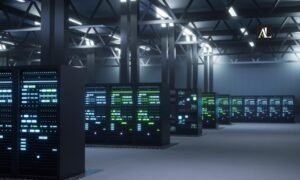
Right now, tech changes fast – what works today might fail tomorrow. Behind every company stands its tools, quietly deciding success or struggle. When smart machines stop being fancy extras and start running core tasks, old computers and mismatched programs just fall short. Leaders who wait for problems before acting will always lag behind. Instead, they begin shaping IT setups that bend without breaking, ready for what comes next. It isn’t about chasing shiny upgrades or signing deals with trendy cloud services. What matters grows when tech plans match real business aims, tightly woven together. A steady direction turns each purchase into part of something lasting, avoiding messy growth that opens doors to risk and waste.
The Move to AI Built Systems That Run on Their Own
Right now, smart systems sit at the heart of how tech setups are built. Not like before, when artificial intelligence tagged along as an extra piece, separate and tacked on. Today’s leading companies bake decision-making ability straight into their base architecture. Because of this, they run with independent digital workers – software agents that handle tasks on their own. These tools reshuffle workloads, balance power needs, fix glitches without help. Once such automation becomes part of the backbone, fixing things by hand fades out. Now, technology crews guide processes rather than chase problems. They shape behavior inside systems designed to tune themselves. Out of nowhere, faster delivery becomes possible when old network headaches fade away. Because of this shift, bulky data handling finds a new rhythm through self-running setups. These smart loops handle huge piles of info needed for guessing outcomes or creating outputs. Without them, machines would lag behind what programs expect.
Embracing the Hybrid Edge and Cloud 3.0 Model
As we look deeper into the technical requirements of the current decade, the “cloud-only” mantra has evolved into a more sophisticated approach. A mature it infrastructure vision now incorporates what experts call Cloud 3.0—a blend of public, private, and sovereign cloud models tailored to specific data needs. This is complemented by the rise of edge computing, where processing power is moved closer to the source of data generation. For industries like healthcare or manufacturing, where millisecond latency can be the difference between success and failure, local processing is non-negotiable. A well-defined it infrastructure vision balances the heavy lifting of the central cloud with the speed of the edge. This hybridity not only improves performance but also enhances data sovereignty and compliance, as sensitive information can be processed locally without ever crossing international borders. By diversifying where workloads live, organizations gain a level of flexibility that protects them from vendor lock-in and localized outages.
Security as an Inherent Architectural Perimeter
In 2026, cybersecurity is no longer a separate department that checks boxes; it is a fundamental element of the it infrastructure vision. With the emergence of quantum computing threats, the traditional network perimeter has effectively vanished. In its place, companies are adopting “Identity-First Zero Trust” models. This means that security is baked into the very fabric of the hardware and software layers. An effective it infrastructure vision treats encryption as a dynamic inventory problem, preparing for post-quantum cryptography before it becomes a standard requirement. Additionally, AI-powered defense systems are now a standard part of the stack, capable of identifying and neutralizing threats in real-time through anomaly detection. By making security a pillar of the infrastructure design, businesses can protect their intellectual property and customer data without sacrificing the speed and connectivity required for modern operations. This proactive stance ensures that growth is never hindered by the fear of a catastrophic breach.
Scalability and Sustainability in a High-Density World
One of the most pressing challenges for any modern it infrastructure vision is the physical constraint of power and cooling. As AI workloads demand higher kilowatt-per-rack density, traditional air-cooling methods are being replaced by liquid cooling and on-site microgrids. A sustainable it infrastructure vision acknowledges that energy efficiency is both an environmental responsibility and a financial necessity. High-performance computing requires a massive amount of power, and forward-thinking CIOs are now acting as energy strategists to ensure uptime. By planning for modularity, businesses can scale their resources horizontally—adding more nodes to the system—without needing to overhaul their entire facility. This modularity ensures that the it infrastructure vision remains adaptable, allowing for incremental upgrades as new technologies emerge. Ultimately, the goal is to create a platform that is not only powerful enough for today’s needs but also flexible and efficient enough to support the innovations of the next decade.
Building for the Future Today
Designing a comprehensive it infrastructure vision is an ongoing journey rather than a one-time project. It requires a deep understanding of how data flows through an organization and a willingness to abandon outdated legacy systems in favor of more resilient, intelligent solutions. By focusing on AI integration, hybrid cloud agility, and proactive security, a business can transform its technical department from a cost center into a powerful engine for growth. The most successful leaders in 2026 are those who recognize that their it infrastructure vision is the blueprint for their entire enterprise’s survival. As the digital world continues to change at breakneck speed, having a solid foundation ensures that a company can pivot, scale, and innovate with confidence. With the right it infrastructure vision in place, the complexities of the modern tech landscape become opportunities for competitive advantage rather than obstacles to progress. Establishing this clarity today is the most important step an organization can take toward a prosperous tomorrow.